


Trom Eayrs targets Big Ag in new book
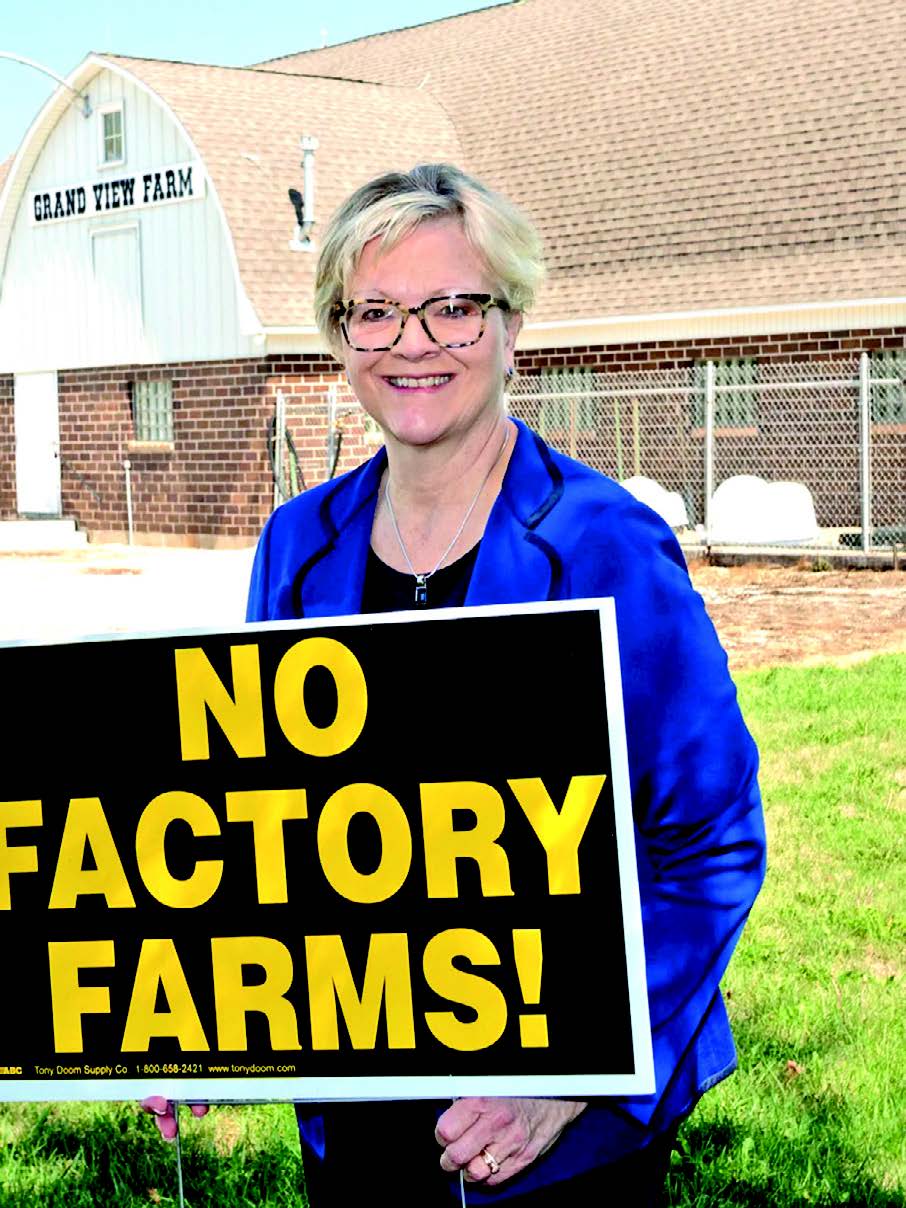
Sonja Trom Eayrs has never been known to shy away from controversy. And with the upcoming release of a book targeting an industry she has battled for years, she’s preparing for more squabbling that will likely take place.
The impetus behind the book, “Dodge County, Incorporated: Big Ag and the Undoing of Rural America,” centers on what has happened to her family farm outside of Blooming Prairie over the past few decades.
“My family has had a front row seat to the metamorphosis to transformation to fundamental change in rural America,” said Trom Eayrs. “That’s the story that needs to be told. We understand first-hand how independent farmers have been run off the land.”
Trom Eayrs claims corporate farming has achieved a power position in rural areas. Writing with the factual rigor of an attorney and the passion of a devoted farmer’s daughter, she argues that what big-box stores famously did to Main Streets across the U.S., Big Ag has been doing — with the same ruthless efficiency — to rural farm communities.
She is a family law attorney in the Twin Cities and still operates the farm with her siblings in Westfield Township in Dodge County.
“I provide a rare insider’s account of how local county boards act in concert with state politicians, the U.S. Farm Credit system, the Farm Bureau network, and compromised D.C. politicians to line the pockets of Big Ag corporations while selling out small farmers,” said Trom Eayrs, organizer of Dodge County Concerned Citizens. “With moral clarity and a sense of urgency, I ultimately argue that we must reject this unbridled corporate greed and reclaim the values of environmental stewardship and commitment to community that were once intrinsic to rural life.”
Trom Eayrs asserts that her family is one of thousands that has been victimized by corporate farming. She uses the lens of her family’s lawsuits filed over the past decade to tell the larger story of modern, industrial-scale factory farming: the air pollution, the cancer clusters and the water contamination among many other things.
“It is the story of my hometown (Blooming Prairie), echoing with a story playing out in rural farm communities across the U.S.,” she said. “This is also the story of my family. We watched as our 760-acre farm was encroached upon in all directions by the look, feel and overwhelming stench of ‘Big Agriculture.’”
She has been working on the book over the past six or seven years. Her late father, Lowell Trom, is an integral part of the book, she said, adding he was interviewed before he died in 2019.
Trom Eayrs said her family has been the subject of “lots of harassment and intimidation” even with neighbors.
“They have tangled with the wrong family,” she said. “I knew in my heart and soul that I was right and was going to keep pushing forward.”
The book, she says, is simply to educate the public. And she’s ready for the backlash and mixed response it will likely generate.
“There will be those who will be angry with the message,” she said. “And there will be those who will be relieved that somebody finally had the guts to come forward and tell this story.”
Trom Eayrs said she chose to write the book because others are afraid to speak out. “And as my father would say, ‘I’m not afraid.’”
Drawing on her experience as an attorney helping couples through messy divorce and custody battles, Trom Eayrs finds it’s extremely important for people to be heard. “It’s part of the healing process,” she said. “It’s important to tell my story and to tell my family’s story. It’s part of our healing.”