


Non-flushable items a problem countywide
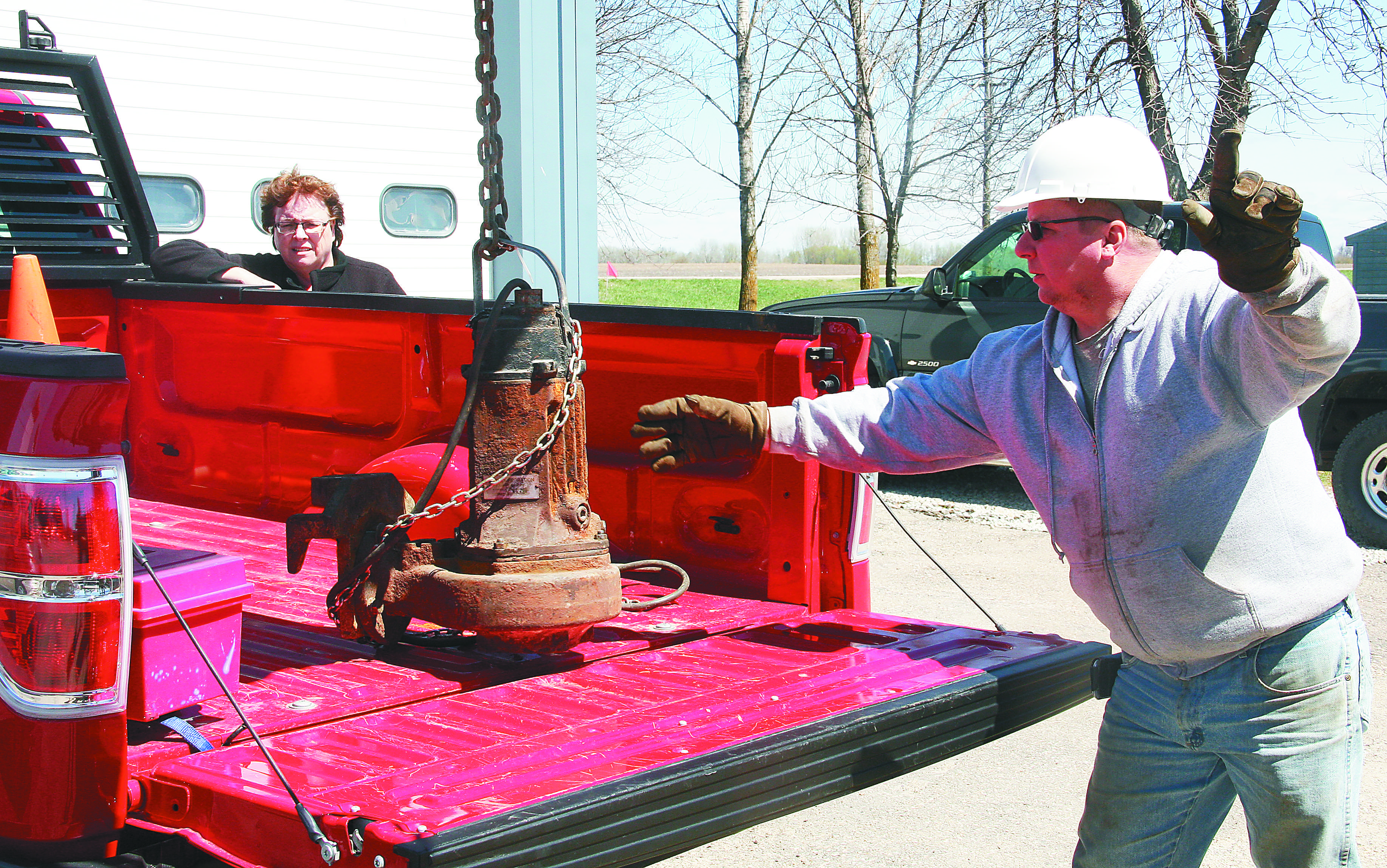
The number of clogged sewer lines is on the rise in Steele County, potentially costing untold thousands of dollars in pump and other repairs.
The culprit? Sanitary wipes that should never be thrown in the toilet, even though their manufacturers label them “flushable.”
The wipes don’t disintegrate and eventually plug sewer lines, said Blooming Prairie Wastewater Treatment Plant Supervisor Sue Penkava. They cost the city money via the increased manpower needed to address blockages after hours, but the price tag will go up if pumps are damaged, she said. Some of the pumps cost about $5,000 each, Penkava said.
“They’re moisturized, for adults or babies,” she said of the wipes. “We’ve seen more and more adults are using them now because of the ads on TV.”
Penkava said she’d heard about similar issues in Wadena, a bit southeast of Fargo, and Brainerd. She added that the issue has been particularly bad in Blooming Prairie in the past six months.
It turns out the problem is a lot more widespread — and older.
Leon Ellis, an operator with the Owatonna Wastewater Treatment Facility, said the wipes have been an issue there since the mid-1990s. One of Owatonna’s pumping stations in particular has experienced numerous issues, he said.
“It brings a very high-horsepower motor to a screeching halt,” Ellis said. “In our case, we’re fortunate enough that the station has some other pumps in it; they keep pumping. Fortunately for us, we haven’t had any backups to anybody’s basements as of yet. But it’s coming.”
It’s a matter of time until one of the city’s pumps stops working, Ellis said. He estimated the cost of one of Owatonna’s pumps at $30,000 to $40,000.
Ellis was at the Minnesota Pollution Control Agency’s annual Wastewater Treatment Conference in March in the Twin Cities. There, he listened to a speaker discuss problems that other towns are encountering, as well as manufacturers’ misuse of the term “flushable.”
That speaker was Pete MacPherson, general manager of Dundas-based Minnesota Pump Works. His company transports pumping equipment to municipalities and businesses.
The wipes aren’t just a Steele County-wide problem, or even a statewide problem, MacPherson said.
“It’s definitely a U.S. problem,” he said. “We’ve got a lot of manufacturers that are manufacturing items such as woven wipes that are used in cleaning, wiping down countertops, things of that nature. A lot of people, instead of throwing them in the trash, end up flushing them in the toilet. What people don’t realize is that there’s equipment downstream that has to move this type of (trash).”
The issue has grown in the past decade as more problematic products have been developed, MacPherson said.
So, what’s the solution? One is that pump manufacturers are adapting designs and adding “grinders” with knives attached that can shred clogging materials, he said.
“Of course, the best way to handle it is for the general public to refrain from putting those kinds of materials into the system,” MacPherson said.
Ellendale maintenance manager Josh Otto said the wipes haven’t been problematic in his city. Medford Public Works couldn’t be reached for comment.