


Chance encounter in Germany changes Staub’s life
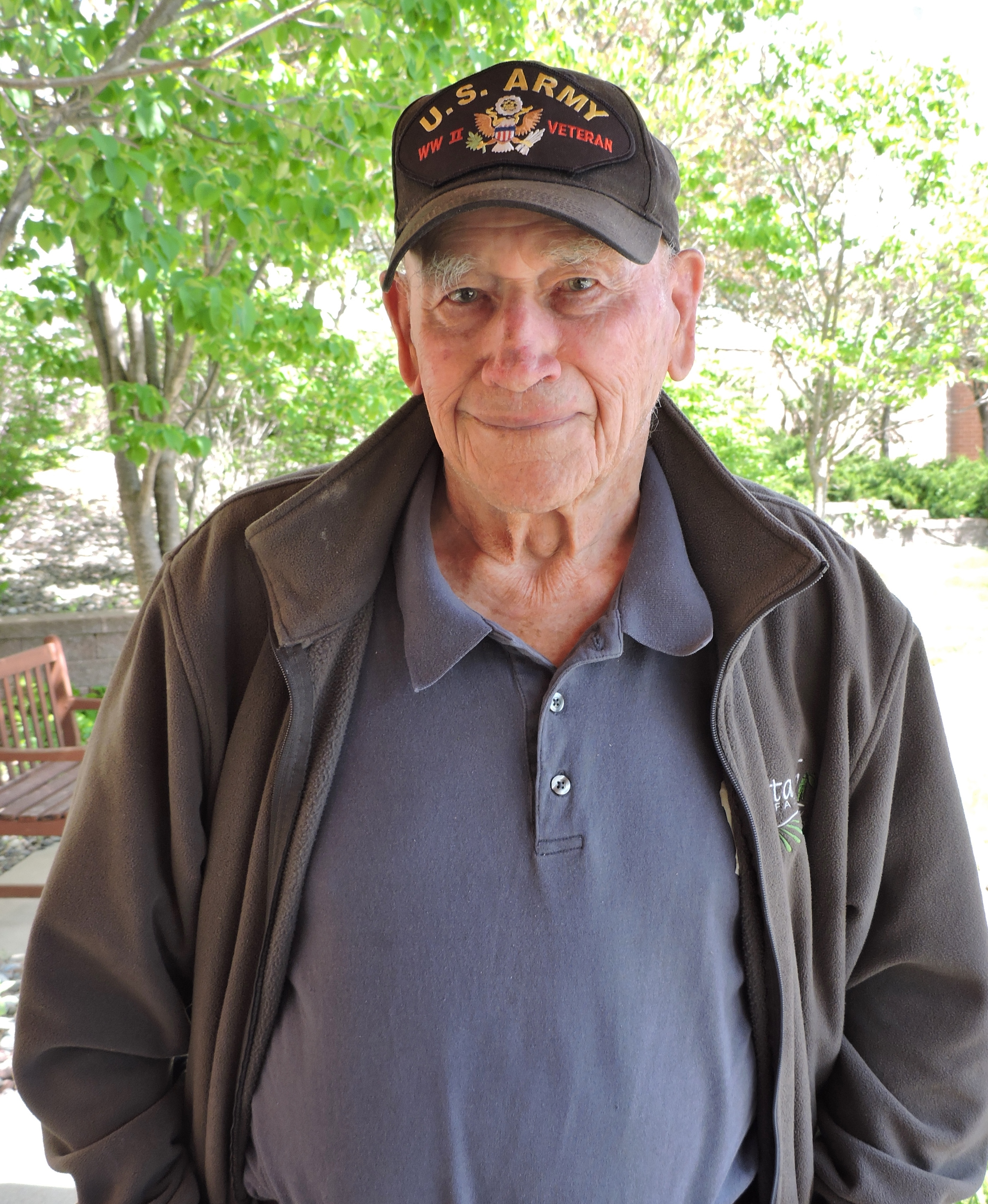
(Editor’s Note: Richard Staub was a longtime area farmer who now lives in Rochester. Born in German his family came to the United States after World War I and later returned to Germany as a soldier in World War II. In Part One, Wayne Hendrickson tells Staub’s story from his early childhood in Germany, move to the U.S., and return to Germany as a soldier. This week his story continues in Germany during the war.)
While in Germany Richard was very near the town where he was born and he was able to stop by and visit his grandmother
When Richard was driving near a small town in Germany, he saw two young ladies walking along the road. Since German citizens could not have vehicles, he stopped and asked them if he could take them to where they were going. At first, they refused, but one girl could speak English and she convinced the other saying there were two of them and he was alone so they could handle him. They didn’t realize Richard could also understand German when they were talking to each other in German while riding along. They were heading out to a farm area that one of the girl's father managed, to pick up paperwork to prove they owned the property to the government. He told them he would wait for them to find what they needed and then he brought them back to their homes.
During this time Richard's future wife was told by her father that she and her mother needed to go stay at the farm as he was being sent to a prison camp for several months and they would be safe there.
Later Richard's buddy had a jeep available so he went out to see her again. Finally, on their third meeting, he told Gisela he could speak German. He was able to borrow the jeep on more occasions and after six months they talked about marriage. Her mother would tell Richard that he should return to the USA and see his mother.
When he told her he was going to bring Gisela along with him when he returned home, she was not excited to hear about this.
Instead of going back to the USA after the war ended in Europe, Richard found a job with the Army Exchange Service for about a year. Gisela knew a Lithuanian pastor that could marry them even though they could still not return as a couple until they received the proper paperwork from the U.S. government. She stayed with an uncle in Germany for several months and the couple's first son was born in Germany.
Finally, they were able to leave for the United States aboard a plane from Frankfurt, along with 24 passengers with stops at Grand Island, Newfoundland, and they arrived in New York on Memorial Day 1947. While they were at his parent's home in Chicago, Richard asked his wife if she wanted to live in Chicago or go to the farm at West Concord.
She said, “let’s go to Minnesota” and live there. The farm was rented out that year when he and Gisela packed up and drove his 1929 Model A and they arrived in Minnesota in September. They drove that Model A for another three years until he bought a Hudson from the local West Concord dealer and his first tractor was a Minneapolis Moline from the same dealer.
Even though Richard never planned on farming, since he thought he would work at the Owatonna Tool Company, they decided to give it a try by buying a few chickens and a cow from a neighbor. Richard thought they never could keep that barn warm with just one cow so eventually, they milked 24 cows for about 10 years.
A local veterinarian asked if Gisela would be interested in taking care of their young child for a few days, which she did. He gave her $10/day so soon another doctor in Rochester asked if she would come and take care of their child for several days. He paid her $15/day and said the other guy had ripped her off. Richard thought, “we are making more money with her job than we are making on milking cows.” They eventually sold the cows, but raised the young stock and also had beef cattle on their 80-acre farm.
When 80 acres next to their farm were for sale, Richard’s dad said he should buy it but Richard told him he didn’t have any money. His dad told him he would give him the down payment, which he did. A few years later another neighbor asked Richard if he wanted to buy his 160 acres. They agreed on a price and Richard gave him a check for $5,000. Richard quickly headed to the local bank and told the banker what he had just done. He told him he didn’t have that much in the bank so the bank president finally agreed to make him a loan that day.
After Richard’s parents retired in Chicago, they also moved to one of the farm sites near West Concord.
Richard and Gisela raised two sons, and when the oldest son came home from his National Guard duty, they farmed together for the next several years. When Richard ended up having his son take over the farm, they would go to Florida during the winter months, and be back for planting through harvest time. After a few years, they bought a home near Sarasota, Fla., and lived there for 20 years.
The Staubs made several trips to visit parents and relatives that lived in Germany. When the Staubs wanted to take a trip to Alaska, Richard was looking for a van but the only kind he would see was the ones that were much fancier than he wanted. He finally bought the one that was still left at the dealer and took out the chairs and converted it with a bed, a refrigerator, and an extra gas tank for the trip. In the 1970s, the Alaska road was still mostly gravel surface. It seemed every vehicle had a cracked windshield or damaged headlights from the stones from other vehicles and their van was no exception.
Later the couple moved back to Minnesota and lived at Prairie Meadows in Kasson for 10 years. Richard and Gisela were married for 70 years, and she passed away in 2015. Richard then moved to a senior campus center in Rochester where he has lived for the last 7 years. He likes playing the card game 500 at the center.
Richard said he enjoys eating German food such as headcheese, sauerkraut, sausage, and his favorite brand “Schlitz” at times.
Richard really got into woodworking when they lived in Florida to give him something to do. He was able to obtain black walnut wood to make five old-style ice boxes, five roll-top desks, and 13 grandfather clocks. He still likes to gather walnut shells and spends time cracking them open and will also put them in a sack, and let the cars drive over them to crack them open.
He has five grandchildren and five great-grandchildren. One of his grandsons has been operating his farm now for the past 20 years. Richard is grateful that his parents moved to America, and he has experienced a good life during his 99 years!