


Time for lutefisk in Kasson
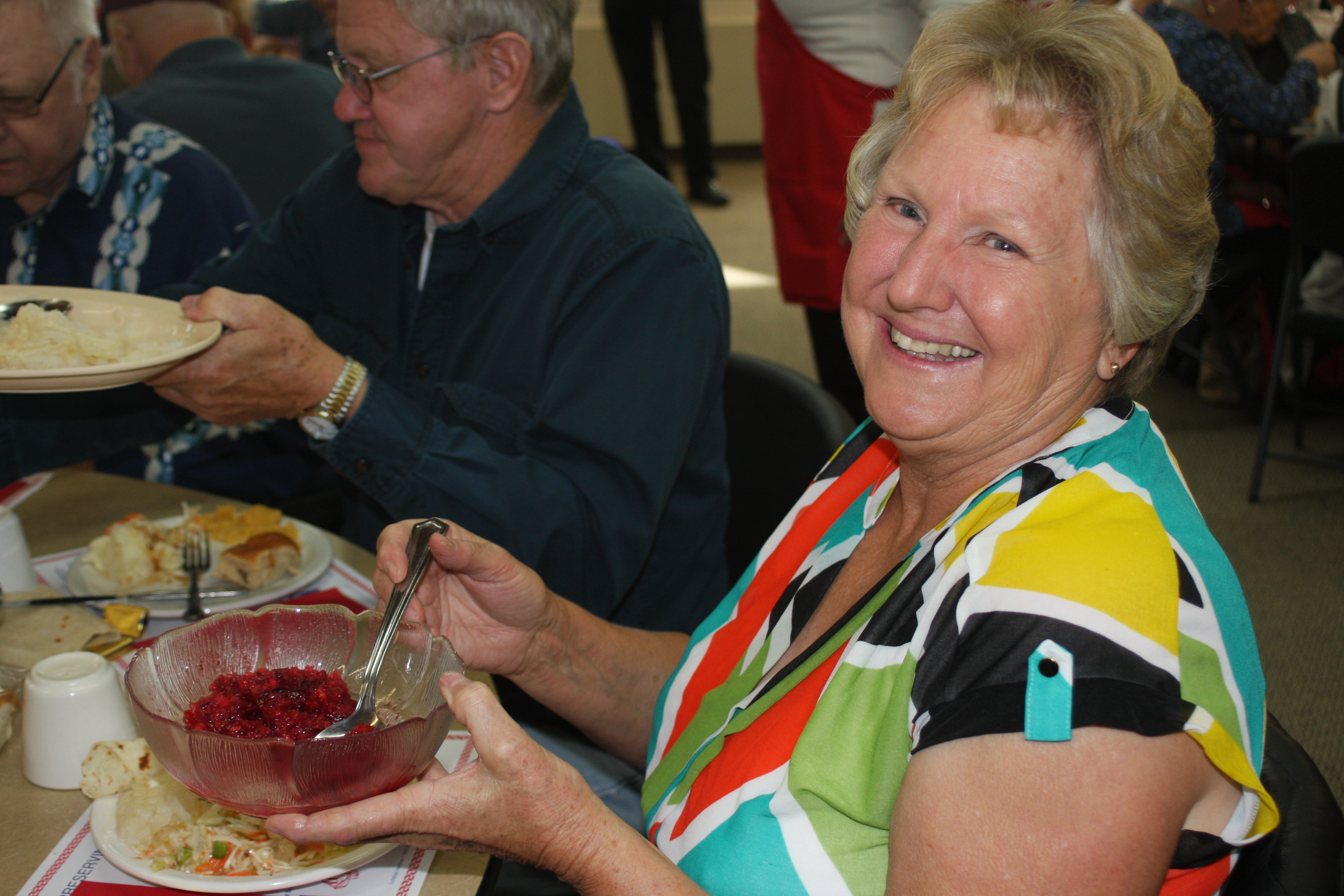
They started to arrive at St. John’s Lutheran Church in Kasson well before 11 a.m. last Thursday. Yes, the bake sale opened at 9 a.m. but that was not really why they came. The real prize was the lutefisk dinner, that Minnesota tradition that turns up every fall, usually at Lutheran churches with a Norwegian heritage.
St. John’s lutefisk dinner is one of the largest in southeastern Minnesota drawing diners from near and far for two seatings, 11 a.m. to 2:30 p.m. and again from “4 p.m. until all are served.” At last week’s noon event people came from Kasson and all over southeastern Minnesota, the Twin Cities and even from Colorado.
For those new to Minnesota, lutefisk is a traditional Scandinavian dish most often associated with Norway. It’s made from aged stockfish, generally cod, and lye. The name literally means “lye fish.” The fish is soaked in cold water (changed daily) for five to six days followed by soaking in a solution of cold water and lye for two days. After the two days in the lye soak, it takes another four to six days of soaking in cold water which is changed daily to make it edible.
Over the years lutefisk has become a tradition in many Norwegian-American homes on Christmas Eve and also in churches during the fall. St. John’s lutefisk tradition began about 1930. It was served annually until 1942 and, according to the church website, resumed in 1962.
Since the church serves nearly 2,000 meals on this day each year, it requires the efforts of many church members and weeks of preparation.
The menu also always includes lefse and its preparation began way back in August when women of the church got together every week to make and freeze several hundred dozens of lefse. Last week the final preparations began on Tuesday, when 900 pounds of rutabagas were cut and peeled. On Wednesday, the rutabagas were cooked, 550 pounds of meatballs prepared and the tables and decorations set up in the fellowship hall. And not to be forgotten were the mashed potatoes, cabbage slaw, cranberry relish and baked goods.
Thursday began early, at 6:30 a.m., when the cooking of the lutefisk began, all 1,700 pounds.
With the preparations completed servers waited in the fellowship hall for 11 a.m. and hungry diners waited in the sanctuary to be seated at tables of eight where the meal would be served family style.
Jan Solberg was sitting at the entrance to the Fellowship Hall where she would help greet diners.
The event always draws a large crowd, she said, with people coming from the Twin Cities, Wisconsin and Iowa as well as southeastern Minnesota. One year, she said, an individual waited to take their vacation so they could come to the dinner.
The dinner works, she said, because the church members are “very organized” in its preparation.
So organized that workers even have a uniform, white shirts, black pants, vests, aprons and name tags. One of her jobs, Solberg said, had been to iron each of the aprons and vests.
“By the time I was done, I was grateful,” she said.
Take-out dinners are also available and last year, Solberg said, they started offering curbside service. People who had pre-ordered and pre-paid for their meals, she said, could drive up and have their food delivered right to their cars.
Among the diners at noon, Rosemary Barrett, who lives near Durango, Colorado, may very well have won the prize for coming the longest distance.
Barrett, who grew up in the area, said she had called her cousin a day earlier and during the conversation asked if the lutefisk dinner was still a tradition. Yes, her cousin said, in fact it’s tomorrow. Without a second thought, Barrett said she would get on a flight to Minnesota. The last-minute flight, she said, was made easier since her husband works for the airline.
“The tradition,” Barrett said of the lutefisk and lutefisk dinners, “it’s so awesome.”
Although unsure of how the tradition of lutefisk began, Barrett said that in the United States, at least, she suspected it was related to how fish was preserved for the immigrant trip across the Atlantic.
She did, however, recall a story told by her Uncle Luther Larson who had visited Norway. While there he inquired about lutefisk and said he was told “we send that stinkin’ fish to America.”
Several tables away, Ordean Greseth of Wanamingo was attracting attention to his chef’s hat which was adorned by a variety of “I Love Lutefisk” buttons while his tablemate, Larry Granger, was enjoying his dinner sporting a “Danes Have More Fun” button.
A steady stream of lutefisk lovers, plus a number who came for the meatballs, filled the church throughout the noon serving. Business was also brisk at the bake sale where the supply of lefse was sold out before noon.
When the last dinners had been served Thursday night, the work was still not over for the dinner committee and the volunteers. They were scheduled to return Friday to finish the clean-up.
When the figures were tallied it turned out that a total of 1,925 meals were served including 1,604 adults and children, 140 take-out meals and 181 workers.