


Haze blankets area last week as fires burn in Canada
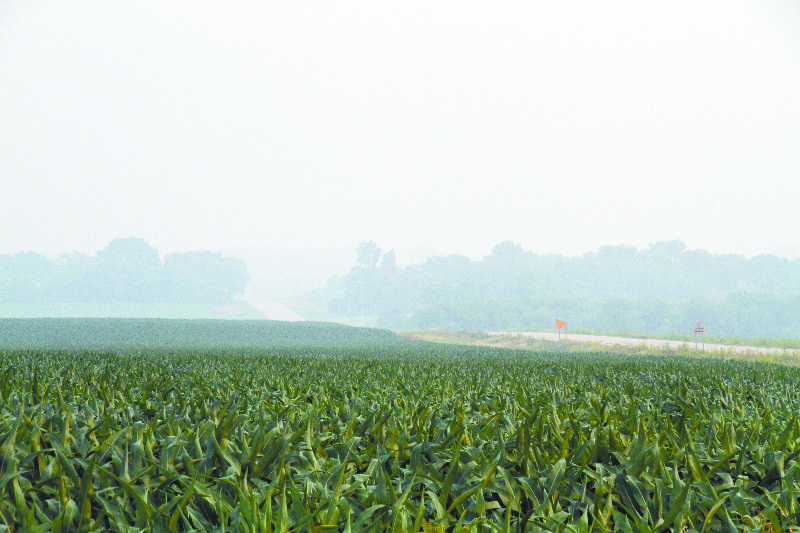
A heavy haze and a smoky smell blanketed Dodge and Steele counties last week as most of Minnesota found air quality unhealthy as the result of wildfires burning in several provinces of Canada.
Although the poor air quality had plagued areas of northern Minnesota for several days, Monday saw the worst of the problem as the Minnesota Pollution Control Agency’s Air Quality Index measured air quality through most of the state as unhealthy for all residents, not just those with medical problems. Agency officials said that the air quality that afternoon and evening was about as bad as it has ever been.
The situation was short-lived for Dodge and Steele counties as air quality had improved significantly by Tuesday morning. Nevertheless, state officials warned, smoky conditions could return at other times during the summer as Canadian firefighters struggle to put out wildfires in British Columbia, Alberta and Saskatchewan. Recent weather patterns have brought smoke from the Saskatchewan fires deep into the Midwest.
Gail Hester of Dodge County Public Health said she was unaware of any calls made to the department regarding air quality but said that air quality warnings are issued by the state and media had made information about the air quality readily available.
The Minnesota Department of Health recommends that those in areas affected by smoke from wildfires decrease outdoor activity and stay indoors as much as possible. Children, older adults, smokers and those with heart disease, asthma or other lung diseases should be especially cautious, MDH officials say.
When unhealthy particulates reach a high enough level, as they did last week, even healthy people can experience symptoms including irritation of eyes, sinuses and throat, coughing, headaches or a runny nose, chest pains and shortness of breath or fatigue.
The Department of Heath recommends that individuals limit their exposure to wildfire smoke by paying attention to AQI and media reports, limit the time spent outdoors, keep doors and windows closed, run air conditioning in recirculating mode only, keep fresh air intakes closed and install and maintain a clean furnace filter.
Also, the department says, paper dust or surgical masks commonly found in hardware stores are designed to trap large particles. These masks generally do not protect your lungs from the fine particles found in wildfire smoke. For respiratory protection, the department said, use an N95 or N100 type disposable respirator.
Although air quality was back in the good range by Tuesday morning, the National Weather Service has also said that weather conditions bringing unhealthy air conditions could happen again until the wildfires in Canada are under control.