


GIVING A VOICE TO VICTIMS
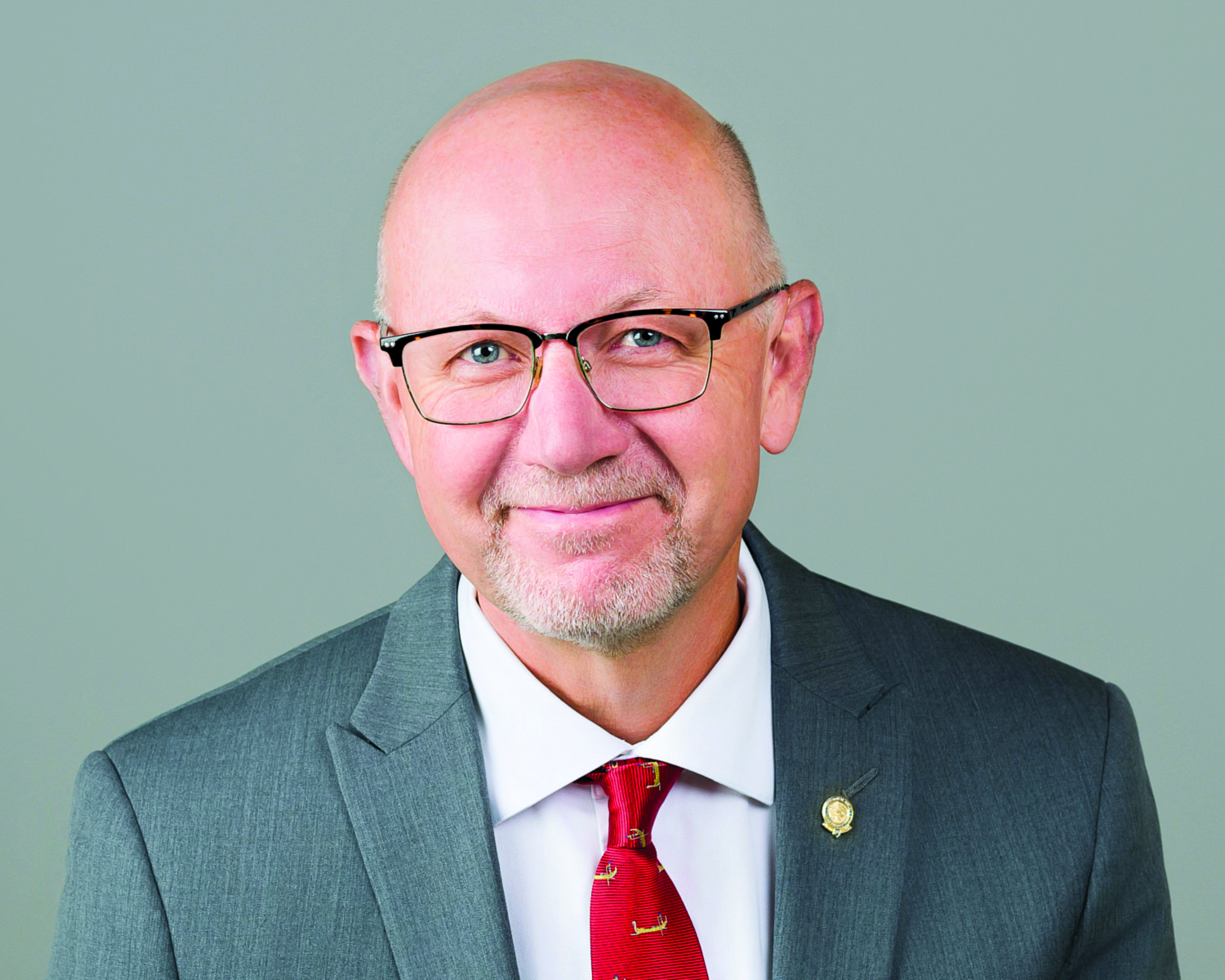
Kendall Hughes remembers his daughter telling him to come home safe before he left for work on Jan. 31, 2002.
A chaplain for a federal maximum security prison in Colorado, he had sometimes come home with blood staining his clothes. On that terrible day, Hughes was stabbed multiple times in the back and the head and nearly died.
“I almost didn’t come home to her and my family,” he said.
Despite his brush with death, Hughes said, what he experienced next was even more damaging.
“What was even more traumatic for me was how the court system handled that,” he said.
Now retired, Hughes is giving power back to crime victims, through Three Rivers Restorative Justice, a restorative justice practice used by Dodge County and others across Southeast Minnesota.
“It all has turned out to lead to something pretty powerful in my life,” he said.
Looking for answers
Hughes was in his third year on the job when he was stabbed.
He was working in a place where offenders were taken after they spent time in—or were one step away from going to—the super maximum facility next door.
“It was a violent place,” Hughes said.
At the time, he knew nothing about restorative justice.
The person who stabbed Hughes was someone who had worked for him. Hughes said they had a good relationship.
“I was trying to kind of help him get ready to get out in a few years,” he said.
The inmate had run into some issues with others in the chapel, and it was determined that he would no longer be able to work there anymore.
“Maybe it’s the reason for what he did, I don’t know,” Hughes said.
In the aftermath of the attack, Hughes thought his work as a prison chaplain would have to mean something to the courts. He wanted a chance to learn more about why the inmate stabbed him.
He quickly realized he wouldn’t get that chance.
The conversation
Hughes and his brother, an attorney, tried to talk to the Assistant U.S Attorney who would be handling the case. The attorney responded that he had never lost a case. He wasn’t interested in a conversation.
Meanwhile Hughes was trying to learn more about the man who stabbed him.
“I wanted to hear what was going on with his mind and also what could be done to prevent this from happening again, because obviously whatever the system was doing with him wasn’t working,” he said.
Hughes learned he would have the chance to make a victim impact statement at the man’s sentencing.
Almost a year after working at the prison where he was attacked, Hughes took a job in Kansas City and moved his family there. He took a demotion. His wife had to quit her masters degree program. His oldest daughter, who saw him being treated in the emergency room, was in therapy.
Hughes worked on what he would say at the sentencing hearing. A year and a half later, he flew to Colorado on his own dime to deliver his statement.
It was supposed to be his chance to get a sense of healing.
Instead, the experience left him with yet another psychological scar.
Forgetting the victim
Hughes sat in court for hours, ready to give his statement, before someone remembered him. He said after the sentencing hearing, the judge looked over and said he forgot the chaplain.
Hughes wept.
As he watched and listened to the sentencing hearing, it became clear to Hughes that the person who stabbed him needed mental health treatment. Instead, the man got 12 years added onto this sentence.
The additional incarceration accomplished nothing. The man ended up back into the system, Hughes said, serving another lengthy sentence.
As a victim, Hughes said, all he wanted was to prevent someone else from being hurt.
“It felt like the victim’s voice didn’t matter,” he said.
Learning restorative justice
While in Kansas City, Hughes was asked to start a program to help inmates who were leaving prison. While managing a different program, he had a conversation with someone who told him about restorative justice.
Hughes quickly realized that was what he had hoped to get through the court system all along.
“That would’ve been more satisfactory for me,” Hughes said about the approach.
Over the years, Hughes said, he has worked with a number of people who have committed violent crimes and are now “upstanding members of their communities.”
While every program is different, the idea is for the offender and the victim, or a stand-in, to discuss what led to the crime and what the best resolution should be. In the case of Three Rivers, oftentimes completing the program requirements can result in charges being dropped.
Hughes said the program has worked successfully over the years.
“I saw restorative justice help these guys,” Hughes said.
But even 23 years later, Hughes has yet to experience that kind of resolution.
In the federal system, he said, “They don’t allow guys to have communication with their actual victims.”
Restorative justice programs happen in the federal system, Hughes said, but they sometimes bring in stand-ins of people who may have been the victim of a similar crime.
The rules haven’t stopped Hughes from writing to his offender at all four facilities where he has been incarcerated—with no success.
The memories of that day that changed his life are still with him. For example, even when he shaves, he remembers what happened to him.
“It never ever really goes away,” Hughes said.
While working with inmates through the restorative justice program, he talks about his story, which he said makes a difference.
“My story matters, where it didn’t in the judicial system,” Hughes said.
Move to Minnesota
Hughes’ wife is originally from Minnesota, and they’d always planned to eventually move back.
When a job opened up at Federal Medical Center in Rochester, Hughes took it, with two years left before hitting the mandatory retirement age of 57.
Hughes continued to work with victims and in restorative justice while working for the federal prison system. After retiring, he felt his calling was to do the work of restorative justice.
He looked at restorative practices in Minnesota and Wisconsin, and in 2019, worked with a Fransican Sister from Sisters of St Francis-Assisi on a six-week course for community members across different spectrums.
At the last session, judges, prosecutors, and public defenders were invited to talk about creating a program in the area.
“There were no restorative justice programs,” Hughes said of the 11 counties that make up the judicial district.
Everyone agreed on the need for a program, so they got to work creating Three Rivers Restorative Justice.
Law enforcement agencies agreed to send cases. Currently, Three Rivers deals primarily with juveniles.
Originally an all-volunteer program, Three Rivers eventually secured a grant to hire one employee and rent an office. To this day, 90% of the work is done by volunteers.
Hughes said only about 10% of those who go through the program reoffend, versus the 37% average overall.
Over the years, Hughes said, they have seen offenders and victims connect even after their required meetings to discuss things they have in common.
“It’s really one of the most amazing things I’ve seen in my life,” Hughes said.
And he still holds out hope of one day speaking to or hearing from his offender.
“I haven’t given up on it,” Hughes said.